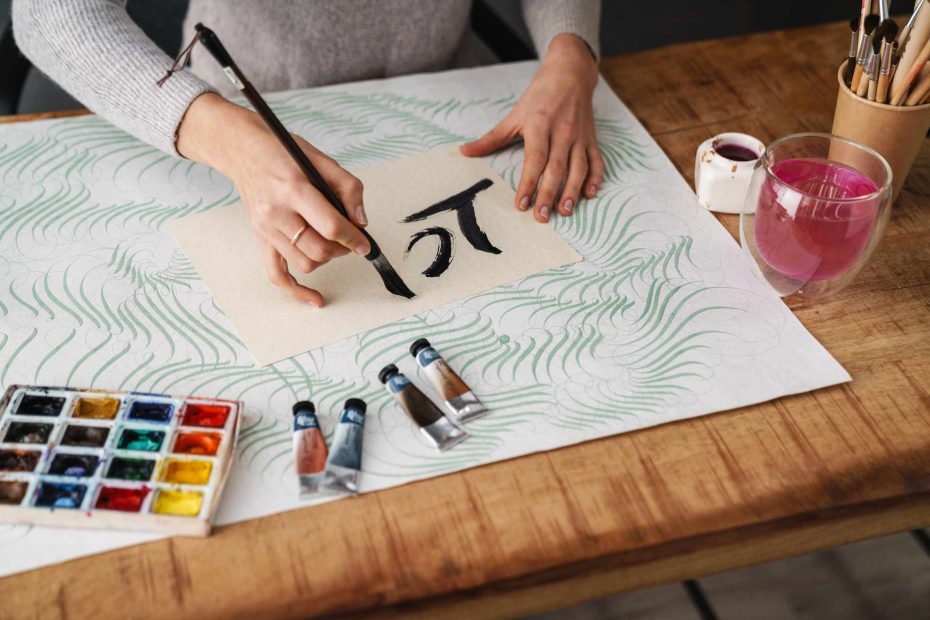
Your pen may be fine, but when you write, you might see ink feathering and spreading. Ink can also bleed through your page or drag if it isn’t suited to what paper you are using. This can be frustrating for beginners, because while your hand might be getting better, your page is making your work look messy, and you will think you are not improving.
Feathering means your ink spreads out from the ink line. It can happen when paper takes in a lot of ink. This makes your line not look so clean and crisp. If your paper sucks up too much ink, the line can look wider than you want. You can also see this as the line is not so straight or even. Bleeding means ink goes through your paper. This can also happen because the ink was not the right kind. It also can happen with cheap and low quality office paper. This can look like an ugly spot where you want your line to be nice and neat. Both feathering and bleeding can make your pen work look messy, which is frustrating if your penmanship is actually getting better.
It’s important to pick paper that is smooth. This will let your pen and ink move freely. Smooth paper means your pen will move across the page without catching, snagging, or even pulling out paper bits. You want your pen gliding freely. Smooth paper will let your pen go across smoothly, and without snagging or catching. Rough paper can make an upstroke look bumpy even if your hand is going smoothly. Office paper may work, but it may depend on the type of pen. It’s better if your paper does not have feathering or bleeding on it.
It can help to draw something small before trying a full page. You could do one light upstroke, one heavy downstroke, an oval, and a word or two. Then wait to see how it actually looks, as sometimes you will notice spreading as your ink settles. You can see whether your line has nice and crisp edges, rather than fuzzy. You might see a dark area where the ink has bled through. Try to find paper that has neither feathering nor bleeding. This will let you get good pen marks, and not worry about paper quality getting in the way of your work.
This is why smoothness and no feathering and bleeding is very important. Practice pages with lines can be good, but you still do not want feathering or bleeding. Practice paper with lines has nice guidelines to check your spacing and letter sizing. This can help you check your letter height with a baseline, x-height, ascender line, and descender line. But you still want smoothness, no bleeding, and no feathering. If you are using practice pages and you see bleeding, you might want to put a smoother practice sheet on top of it. If you want a light box or a strong light or window, you can use the practice page as a template.
This also affects how much pressure you are applying. If you write with light pressure on a smooth surface, you can see it. But if it is a rough sheet, maybe that line is too faint, and you may be tempted to try writing harder. This extra pressure could also squish the tip of your brush, or catch your nib. It can also make the contrast between up and down strokes look less obvious, which makes writing harder. If your practice is feeling like too much work, your paper might be to blame instead of only your hand.
With smooth paper you can more easily see how your practice is really going. You do not need nice, polished lettering. Or expensive paper. You do just want to be able to see whether you are making upstrokes too light, keeping your pen angle consistent, and getting even ovals and loops. Good paper will let you see how much pressure you are using, and if your line is thick or thin. It does not matter what paper it is or what size your page is, but you need to pick paper without feathering or bleeding so you can see whether you are doing better or not.